
*** WARNING ***
Some people may find the topic of menstruation a bit uncomfortable so feel free NOT to read any further from here!
*** NOT GROSSED OUT? THEN READ ON! ***
When I started using cloth nappy products to try to reduce rubbish, there were lots of links to how to reduce your waste from disposable feminine hygiene products too.
Having been brought up on disposable products my whole life, I was astonished by the idea, and a little skeptical, of course. How do you clean them? Is it hygienic? Are they safe? And isn't it a bit GROSS?
Well, of course it is. If baby poo on nappies can be done and be clean then why can't blood (or breast milk) for that matter.
So for the person who would like to make a move towards reducing their feminine hygiene landfill footprint, here are a few options.
Reduce your menstruation
Surprisingly, many people think that if you don't shed your endometrium monthly, somehow a bad buildup of excess "period" is dirty of bad for you. What a period is, is that every month a hormone surge will encourage the lining of your uterus to grow and thicken so it's nice for "planting" a fertilized egg. If the egg is not fertilized then the hormone surge dissipates and the hormonal support for that thickened lining is gone, leading to shedding of that thickened lining, which is the "period".
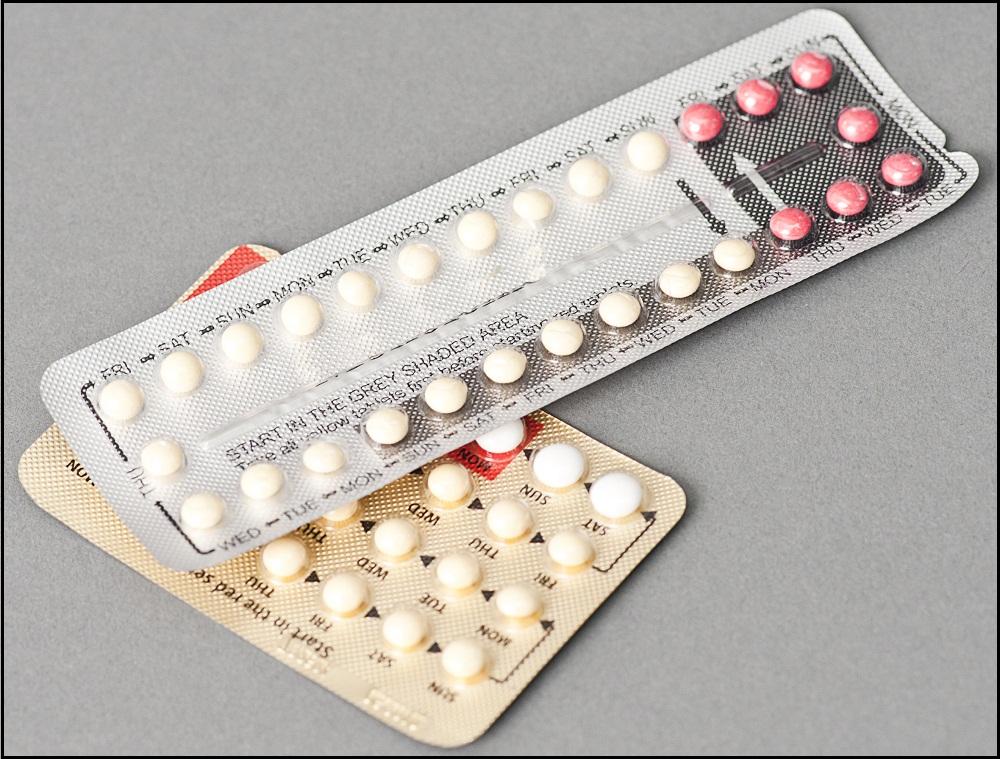
Taking the oral contraceptive pill continuously, or having an implanted device such as an implanon, or an intrauterine device can reduce your periods. How it does that is that they have other hormones that inhibit the growth of that fertile lining for eggs (in the case with the pill and implanon, it suppresses the release of the egg) and so you don't get a period. However, much like the lining of any tissue, it has to shed every now and then so you can get spotting at various times.

The advantage of not having your lining growing and shedding all the time is that it decreases your risk of endometrial cancer. This is because the cells aren't proliferating highly because of the hormone surge. Think about it, if you're making lots of new cells, there is more chance that one of those new ones are going to go awry and become a cancer. So if you make, say, 1000 new cells a month just from normal turnover, but when you have a hormone surge to thicken your uterus lining and then shed it, now you're making 2000 cells amonth, and your risk of getting one bad one is one in 10000, then after 10 months you're likely to have 2 bad cells if you get periods, compared to one if you get none. Now that's an oversimplification, but you get the idea!

So, less periods, less feminine products used. Easy!
Menstrual Cups

Mentrual cups are inserted into the vagina and basically "catch" the blood in the cup, which you just take out and empty, wash and reinsert. However, these things are not one size fits all, and it takes some time to figure out which one is best for you.
I haven't used them myself, but this article has heaps of helpful advice on different cups, depending on the shape and length of your vagina and cervix. The reason I don't use one, is because at work, I think I'd feel a bit embarrassed washing my cup at the sink where others could see me.
It's also quite cheap. One cup is probably about $30 and that can last you for years. Think of all that landfill you're saving as well as the wallet benefits! However, I think if you are unfamiliar with inserting things into your vagina then this has a bit of a learning curve and it's an easy thing to abandon if you feel uncomfortable putting things "up there".
Reusable Cloth Pads

These are similar in materials to cloth nappies and also can be used over and over for your whole reproductive life, I think! The outlay for these is more than a menstrual cup (each pad is between $5-$12 depending on absorbancy) and like cloth nappies you probably need a good stash to get you comfortably through. I would say you would need at least 10 if you're going to wash them every day, and 15 if you want to wash every 2 days. That's easily $100, and considering it costs about $6 for a pack of 16 tampons, and $3-$6 for a pack of 16 pads, you would need 1.5 years to make any savings.
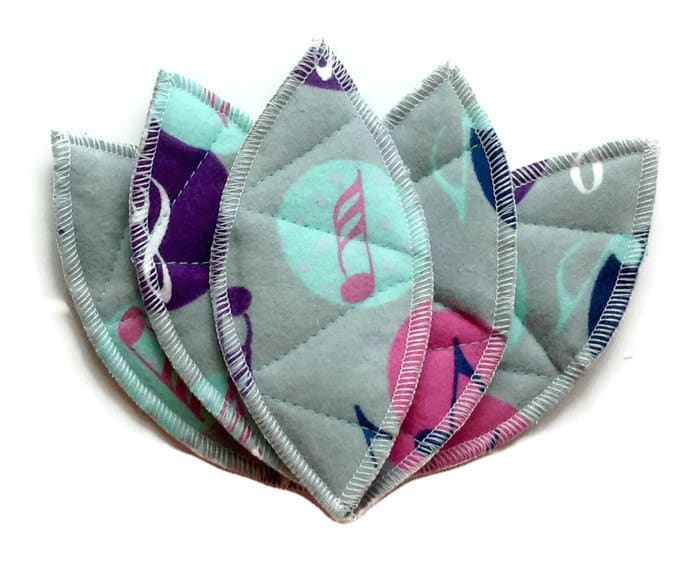
Interlabial pads sound uncomfortable but they are useful for that "gush" you can get sometimes, whether that be blood or urine, and some people swear by them.
If you bring a wet bag to put your used pads in, they will contain the smell and the wetness and they are discrete - just empty the contents for laundering when u get home.
Laundering is probably what people find a bit icky, but if you've ever had to wash your blood soaked pants from "accidents" before, then it's not that different. A bucket of cold water to soak and then wash and all the blood comes out. No fabric softener though, that will wreck absorbancy (just like cloth nappies).
Period Underwear
I had never heard of these until recently, but they seem like an awesome idea, especially for the person who wants to feel as "normal" as possible without the bulk!
Thinx and Lunapads are American brands, and Modibodi an Australian brand, and are all very similar - except for political agendas!

They look like normal undies, and I think that might scare people, because how can they not leak? The advantage of these undies is that they could also be useful for incontinence as well, so you can use them when you get older as well (or for everyday if you need it for sneeze and cough protection). The disadvantage is that they are pricey - it's about $30 for one pair of undies. And how many undies do you need a day? Is it just one? There is also wash and drying time to consider, so I would recommend at least 3 pairs.

Alternatively, you could use these just as undies during your period when you are using some other kind of reusable product. Especially at night time or during sports! I personally think these are the best in terms of convenience as protection and though some people swear by them as the sole use during menstruation, I'd be scared if I had a heavy period.
Sea sponges

The little blurb in the pic tells all. But look at the size of them! I can't imagine they would be comfortable to insert, though they are smaller than a baby's head...
I remember when I was at Uni and read an article about a girl who was sewing strings onto her sponges much to her roomie's horror. I remember thinking at the time I wouldn't be game enough to use them.
Fast forward to now and my thinking has changed. The only thing is, I can't figure out where you can get them in Australia. Are those normal sea sponges you use for makeup ok? I assume so? Are they going to fall to bits inside you and come out piecemeal? For those that have used them, they say they are quite comfortable because they are squishy and conform to your inner curvatures better. I think you would need to sew a string on them to be able to get them out easily though. From what I can see, they cost about $30 for two, from overseas. And since they are animal products, they may be hard to get into the country past customs.
Crochet tampons
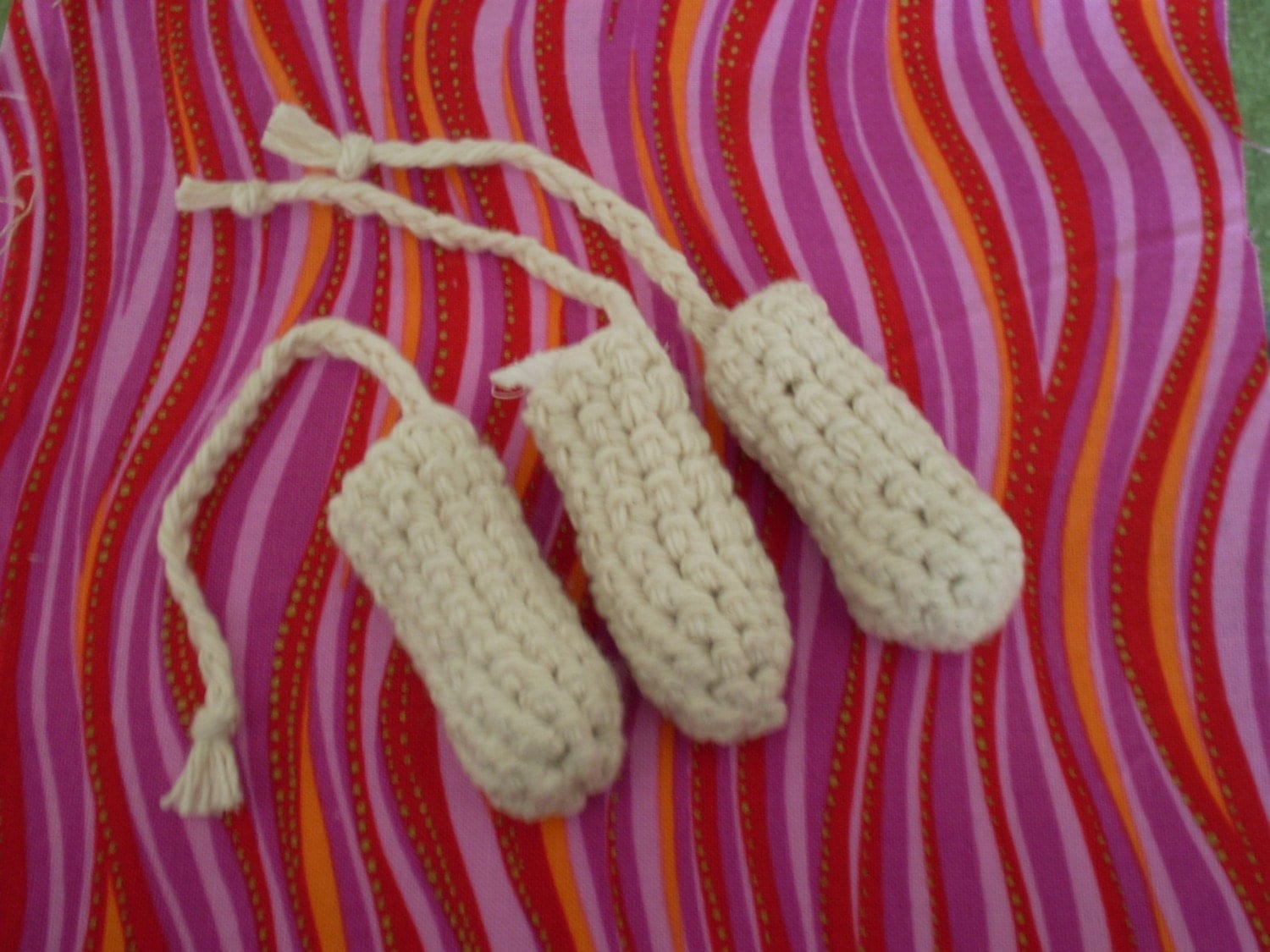 |
| This is from eclectically creative's etsy shop |
So... Are you converted yet?
Ok, there you go, things that people use as an alternative to disposables! I mean, poor people must menstruate too, or people who live in villages, what the hell do they use? I think that it's a huge mindset change that people need to go through. Most of the concerns are about extra work and cleanliness.
Dishes are a classic example. Is a disposable plate cleaner than a washed ceramic plate? Isn't it easier to throw out a plate than it is to wash it? Aren't disposable plates cheaper than a good dinner plate? And you're putting it into your MOUTH! Underwear is against the outside of your body - as are pads - so why do they have to be sterile rather than just washed clean like any other clothes?
I've just given you some options if you'd like to make a difference. Hopefully something catches your fancy, but if not, don't sweat it! Just pass this on to someone if you know they would like to consider making the change, to at least give them some ideas :)


